The glimmer of hope
Dhaka Tribune
| June 17th 2025, 6:00 PM
Speed
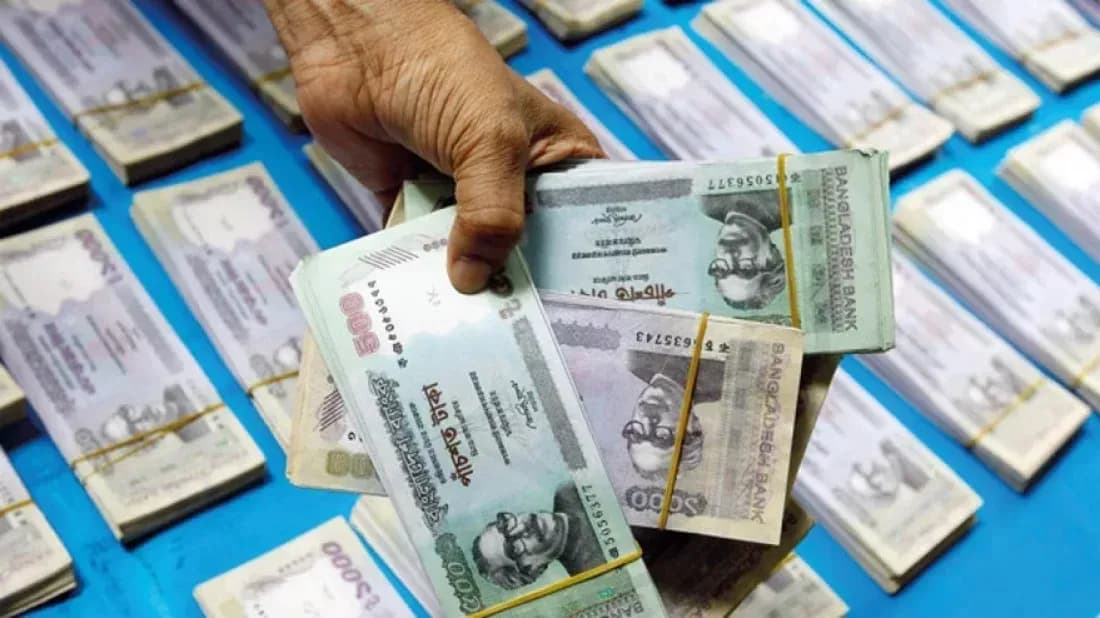
Bangladesh, once South Asia’s rising star, has been ostensibly unraveling for the past few years. Its economic miracle -- decades of breakneck growth fueled by garments, remittances, and grit -- has been buckling under a relentless onslaught of inflation, banking chaos, and political tremors. The question now is not whether Bangladesh can recover, it is whether it can survive a descent into potential material economic challenge.
Risk of higher and sustained Inflation
Inflation has fluctuated around the 9% mark over the past two and a half years, a beast refusing to be tamed. Food prices, accounting for more than 45% of the Consumer Price Index (CPI), are the ringleader. Rice, the lifeblood of 170 million Bangladeshis, soared after 2024 floods ravaged paddies and export constraints choked supply. The central bank’s fix -- cranking the policy rate to 10% -- has seemingly been a futile gesture, like attempting to navigate through rough seas with a paddle boat. This is most likely not a demand-driven excess, but a supply-side shock.
The potential fallout is vicious. RMG workers in Dhaka, scraping by less than Tk14,000 monthly, stormed streets in late 2024 demanding 20% wage hikes as basic food costs spiraled. Businesses, margins razor-thin, hiked non-food prices to survive, cementing inflation at 8-9% through FY26 -- far above the government’s ambitious 6.5% target. Political unrest fuels sky-high expectations, while the risk of a significant Taka devaluation has grown materially due to the vulnerability of a more market-driven exchange rate system to external shocks.
Businesses under stress, job opportunities scarce
The private sector has been hemorrhaging. Smaller businesses are suffering since the political chaos that began in July last year. Hundreds of firms are gone, and unemployment is creeping up already (4.6% to an estimated 5%+). As usual, informal sectors are impacted the most. Jobs are unlikely to come back anytime soon. The government balance sheet and income statements are under stress due to multiple reasons including increasing debt and poor and decreasing revenue collection, and private firms are bunkering down. The entire banking system as we the plumbing of fund flow is under serious stress and most certainly not improving.
Banks: The erosion of capital continues
The banking sector is most likely eroding an already stressed capital base in real time given general macroeconomic drivers since Q4 2024 -- super charged by exploding stress in the credit portfolios and growing at least 12% rate equivalent 90 day T-bill. Non-performing loans (NPLs) spiked to over 20% by December 2024, up from 9.9% a year prior. One of largest, a state bank, clocks NPLs near 25%, tied to poorly structured loan facilities with high-risk collateral. The Capital Adequacy Ratio (CAR) languishes at 6.86% -- far below the 10% minimum -- while stressed assets balloon to over Tk650,000 crore, and most likely over a third of all loans.
At least six banks teeter and capital adequacy largely ignored; if any of the large banks encounter solvency issues, a depositor trust could most certainly adversely impact the entire financial system. Bangladesh Bank’s plan to merge six troubled banks and transfer ownership to the government may protect public trust in the short term -- at the cost of further shrinking fiscal space.
Savers are also spooked -- deposit growth crawled to 8.21% in April 2025, with the average growth over the past 12 months hovering at just 7.93%, as cash fled to mattresses or was spent on essential items. Bangladesh Bank has been challenged to recalibrate without adequate visibility and capital firepower. Private credit’s flatlined at 7.57% growth, strangling businesses.
Moody’s recent March 2025 downgrade of the banking sector to negative may further deter investors, drive up transaction costs, and raise LC expenses, straining businesses and the economy.
A corrupt quagmire of lawlessness
Bangladesh’s long-compromised legal system has been further turbocharging the situation, choking commerce with corruption and a flood of false, baseless cases devoid of due process. The legal system has been a cesspit for decades -- 4.5 million pending cases at the end of 2024, up 5.13% from 2023 -- where justice is sold to the highest bidder. Anyone with money and bad intent ,including a defaulting client, can short circuit the legal system. Meanwhile, fabricated lawsuits and corrupt regulators continue to paralyze businesses: In 2024, many businesses faced a trumped-up charge financed by a rival and faced serious reputational risk without evidence or a proper hearing. Due process has largely been a myth in Bangladesh; as politically wired cronies -- regardless of who is in charge, tied to billions in bad loans -- evade accountability with greased palms.
such lawlessness screws foreign investors too, due to glaring lack of enforceability of contract, no real protection for anti-competitive or illegal business practices, flouting international law and Bangladesh’s 1980 investment treaty with the United States. The treaty promises fair treatment and dispute resolution, but Bangladesh’s judicial farce delivers neither, inviting arbitration at the World Bank’s ICSID.
A 2024 Transparency International survey found that 68% of businesses paid bribes to navigate disputes, repelling foreign capital. Investors flee, confidence implodes, and the economy bleeds -- a legal system not just broken, but a weapon of economic self-destruction and a disgrace. This increasingly adverse trend will most likely have a long-term adverse impact on not only potential FDI but also send shockwaves and glaring warnings across any potential FDI investments including from the United States.
Eroding government income and foreign aid
NBR tax collection remained sluggish, rising just 3.96% in the first 10 months of FY25 -- 37.6% below the target. VAT and income tax collection growth could not hold the historical momentum as families ditch TVs for rice, businesses barely surviving. Customs and excise bleed too, with squeezed imports. Fixed costs eat over 60% of the budget, leaving no wiggle room, reflected in the proposed budget of FY26. The inevitable austerity led to a cut in the development budget by TK35,000cr while the operating budget increased by Tk28,000cr. Hence, the mega-projects are unlikely to be finished and at the same time liabilities will grow and cannot be cancelled easily.
Foreign aid is also adversely impacted -- commitments down 43.99%, disbursements off 17.84% -- spooked by political turmoil. The government is putting even more stress on banks instead, choking private credit further. It's a vicious cycle -- less cash, more debt, weaker banks, no growth.
Exports and remittances prop reserves at $20.6 billion, holding the local currency at Tk123 per $1. Import restrictions are still in place and FY25’s $4.3 billion debt bill looms. Unsurprisingly, FDI headlines also continue to disappoint. While economic chaos has kept the five-year average inflow at $1.5 billion, political instability most certainly has triggered a further 71% drop in Q1 FY25. A flexible exchange rate could tank the Taka by 15-20% -- Tk150/$1 by late 2025, petrol at Tk200 per litre. Inflation could hit 12%, as reserves plummet below $15 billion due to any internal or external shocks including if overseas jobs dry up.
A glimmer amidst the gloom
The best case is most likely a hallucination: Food subsidies, fiscal discipline, and remittance luck limp growth to 2% by 2026, inflation at 9%. But politics is highly unpredictable and volatile -- July 2024 proved it -- and global jolts like $100/barrel oil at sustained level could materially destabilize the economy. The worst case would be if the government is unable to act, inflation tops 12%, the Taka craters, a bank fails, and riots erupt. Growth stalls at zero, unemployment hits 7%, and stressed assets swell to Tk800,000cr.
Yet, Bangladesh has defied odds before. Its RMG sector has weathered global slumps, and its people rebuilt after cyclones. The interim government must act now -- fast-tracking food production with real subsidies, merging failing banks with ruthless precision, securing an IMF lifeline and attracting strategic foreign investors for a sustainable and a robust economy that benefits hard working citizens. The administration also needs to stop living in denial and empower qualified leaders in the right seats -- doing so could claw back from the edge. Remittances, a $24 billion anchor -- which saw successive record-breaking numbers in February, March, and May, and a young, restless workforce -- give us reason to hope still.
This storm is a leviathan, and 2025 could drown the dreams, but if history is any guide, Bangladesh’s resilience cannot be underestimated for a potential brighter future.